Showing posts with label picture books. Show all posts

Friday, December 2, 2022

7 Days of Books, Day 2 Our Diverse World


It's our second day of celebrating children's books with #7DaysOfBooks, and I'm excited to recommend titles that help readers learn about and engage in our beautifully diverse world, as well as connect with their own heritage.
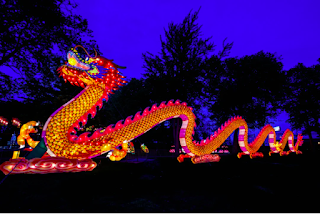

Holiday lights in Seattle: https://www.seattlemet.com/arts-and-culture/best-places-to-see-christmas-lights-in-seattle


We have a treasure trove of giveaways today, and I hope you'll support our wonderful authors/illustrators by finding them online and learning about these and other books that they have created.


Luminara Holiday Lights, Utah 2021. Photo by SKWenger


My Paati's Saris 
by Jyoti Rajan Gopal, illustrated by Art Twink (Koklia 2022). 

Inspired by an experience in her class one day when she shared her saris with her students, this beautiful book shows all the different meanings that the wearing of traditional saris by his grandmother holds for a young Tamil boy as he goes about his day with her. Meanings of color, song, environment, food, dance, music, family, and self pour from the page. This special story holds a universal theme for everyone regarding relationships and celebration of heritage, and I highly recommend it for all readers and all ages.


Priya Dreams of Marsala and Marigolds by Meenal Patel (Beaver's Pond Press 2019). 

I absolutely love this exploration of Indian culture told from the perspective of an Indian-American girl named Priya who longs to fill her Babi Ba's heart with memories of India, and how when she explains what she is making at school, her classmates join in to create the longest garland of paper marigolds ever. I highly recommend this book for readers of all ages, especially those who enjoy baking in the kitchen, picking flowers from the garden, and sharing in new experiences with others. The lyrical text and bright illustrations are a treasure to be relished with repeated readings.


All the Places We Call Home 
written by Patrice Gopo, illustrated by Jenin Mohammed (Worthy Kids 2022).

As a mama shares memories of her daughter's previous homes and those of family in South Africa, Zimbabwe, and Jamaica before tucking into her own bed in America. This beautiful story will spark conversations of the homes of older family members and ancestors in all little ones. Highly recommended for the lyrical and gentle tones mixed with vibrantly soothing illustrations.


Diwali in My New Home
 written by Shachi Kaushik, illustrated by Aishwany Tondoon (Beaming Books). 

When a young girl named Priya faces the prospect of celebrating Diwali--the festival of lights--outside of India, she is saddened that no one seems to know about her favorite holiday. The lights, traditional clothing, decorations, and songs that were present for her in India are absent from her school and community. But as she and her family begin to make preparations to celebrate Lord Rama and the goddess Lakshmi, neighbors take notice and ask questions. Soon, the celebration for the victory of light over darkness extends to including new friends and neighbors. I highly recommend this book for all readers to spark curiosity and learning about diverse cultures and holidays that can be celebrated in our world.  


The Moon from Dehradun, A Story of Partitian 
by Shirin Shamsi, illustrated by Tarun Lar (Atheneum 2022).

This beautiful story about a family who was forced to flee their home in India after withdrawal of the British government in 1947, shows the power of resilience and hope in a young girl who turns despair over leaving behind a home and beloved doll into tender affection and understanding shown toward her baby brother and their new life in Pakistan. Inspired by the true-life events of her mother, author Shirin Shamsi hopes that The Moon from Dehradun will help build bridges of understanding, tolerance and respect on both sides of the border. I highly recommend this story for all readers, as it will spark discussions of empathy and learning for the conflicts experienced by the diverse populations of our world.


From the Tops of the Trees 
written by Kao Kalia Yan, illustrated by Rachel Wada (Carolrhoda Books 2021). 

This slice of life offers the perspective and experiences of a young girl named Kalia growing up in Ban Vinai Refugee Camp in Thailand as a Hmong refugee. When Kalia asks her father what life is like outside the camp, he doesn't immediately have an answer. But by the following day, he finds a way to show her. This tender story shows the love between family members who wait for a way to a better life for themselves. An uplifting story for readers of all ages.


Brown is Beautiful by Supriya Kelpar, illustrated by Noor Sofi (Farrar Straus Giroux 2022).

In this wonderfully rich, lyrical text, young readers will see how brown, a color in nature that may not always be called out as a favorite, is shown as exquisite, strong, and worthy of celebration, from the tiniest ants to the tallest mountains. This story is also a celebration of self and identity, and by the end, readers will be identifying the wonderful attributes that lie within themselves and perhaps seeking affirmation in the natural sights they see around them. I highly recommend this book for all young readers and story times! It truly is a celebration of beauty in all.


Amah Faraway
by Margaret Chiu Greanias, illustrated by Tracy Subisak (Bloomsbury 2022).

In this lovely story, a girl gets to visit her grandmother in China after knowing her mainly through video chats. Gradually, through a series of different experiences around Taipei, Kylie reconnects with her Amah, and also changes from being shy and uncertain to curious and brave in her exhuberant exploration of this new place. I loved seeing the transition shown in this young girl embracing her heritage and culture, and then learning how to carry that connection with her Amah back home as they continued their weekly calls through video chats.


Namaste is a Greeting by Suma Sabramaniam (Candlewick 2022). 

This lovely and lyrical book explores the different meanings and spirit of namaste through the eyes of a young girl. Kindness, thoughtfulness, community, compassion--all are shown in this beautifully illustrated and wonderfully told story for readers of all ages. 


And now on to our prize giveaways! They are amazing!

Be sure to comment on the blog and earn extra entries with the rafflecopter for one of the following prizes. Prizes are shown in the side arrows of the rafflecopter. Good luck and thank you for participating!


1) A picture book manuscript critique from author Jyoti Rajan Gopal

2) A signed copy of Priya Dreams of Marigolds & Marsala from Meenal Patel to US address

3) Winner's choice, a copy of All the Places We Call Home to US address or an Ask Me Anything chat with Patrice Gopo

4) A copy of Diwali in My New Home and prize pack to US address from Shachi Kaushik

5) A copy of The Moon from Dehradun to US address from Shirin Shamsi

Thursday, June 23, 2022

Get Ready for 7 Days of Books! June 2022.


Hello readers, writers, and book lovers!

It's that time again for another round of 7 Days of Books where I hope you'll dive into checking out new book titles and near-new titles, or even some much-adored classic titles that I've grouped into seven different categories. 


Putting together a list of books to share with you every six months is one of my favorite pastimes. I hope you enjoy jumping on board to participate by showing our book creators some love in gathering up some of their new books to read with your kids from your local library or independent books stores. Along the way you can also earn your way to winning one of several wonderful giveaways! 


When is this happening? Great question! The official 7 Days of Books for June kicks on of Sunday, June 26 with one of my favorite categories: HUMOR. 


Did I say favorite? I couldn't have. Because really, all of the categories I'll be sharing are favorites of mine for their own unique qualities. I hope you'll see how wonderful they are, too. 

Here is the line up:

Day 1, June 26: HUMOR

Day 2, June 27:  NATURE AND ANIMALS

Day 3, June 28:  PERSISTENCE, RESILIENCE & INSPIRATIONAL

Day 4, June 29: SOCIAL-EMOTIONAL LEARNING

Day 5, June 30: STEM & HISTORICAL NONFICTION

Day 6, July 1: FAMILY RELATIONSHIPS, CULTURE & TRADITIONS

Day 7, July 2: PROBLEM-SOLVING


Yes, I did mention prizes. In addition to discovering wonderful new books to share with your kids during summer down-time, you'll also have an opportunity to win signed copies of books, zoom chats with the authors, and PB manuscript critiques. 

Here are the giveaways up for grabs from lucky winners so far:


At least ten copies of different books from different authors 

(It will be like new presents are being opened every day when you discover the titles!)

Four 20-minute zoom calls with different authors

Five free critiques of PB manuscripts from different authors


Stop by every day from June 26 - July 2 to see the different children's book and titles that are being celebrated so that you can be inspired to share new books with your loved ones.


Happy Summer Reading!


Wednesday, June 30, 2021

7 Days, 7 Books, Day 4. I'm a Hare, So There! by Julie Rowan-Zoch

What is the difference between a jack rabbit and a hare?

What is the difference between a chipmunk and a ground squirrel?

What type of animal might want to eat rabbits, I mean, hares? A jackal? Or a coyote?


I'm a Hare, So There! by Julie Rowen-Zoch moves us into the middle of the week with a fun picture book that also provides curricular tie-ins to biological science for all sorts of topics. Evolution. Predation. Comparison of Traits. Ecological and Community Interactions. And so on.


I envision this book providing an entertaining way to engage kids and get them thinking about ecological relationships, as well as the names that are assigned to different animals, or even different names that are given to the same animal!


When it comes to books written about animal topics, there are so many to choose from--especially when it comes to pairing titles in the classroom. Below, I offer a few that can provide bridges into a variety of subjects.


Whole Whale by Karen Yin and illustrated by Nelleke Verhoeff is a rhyming story that features inclusion and mathematics given that there are 100 animals to count by the end of the story! For an extra exploratory game, children may enjoy seeing how many habitats are represented among the animals. How could the animals be sorted? Big vs small? Dryland vs Wetland? Hot region vs cold? And what about that whale? Will they be able to predict how that big, big whale will fit on the page with the rest of them?


Jet the Cat (Is Not a Cat) written by Phaea Crede and illustrated by Terry Runyan is a book that offers a twist to the theme of identity and naming labels that is offered in I'm a Hare, So There!  

Jet the Cat explores expectations and what makes Jet like other animals, but also . . . what makes Jet different . . . and unique. 


Lastly, I offer the pair of books written and illustrated by Cassandra Federman: This is a Sea Cow and This is a Sea Horse. In reading these stories, children will laugh at the comparisons between manatees and cows, and between sea horses and land horses, respectively. Enjoy!


Tuesday, June 29, 2021

7 Days, 7 Books, Day 3. SOAKED by Abi Cushman

The books on yesterday's blog post allowed for deductive reasoning in young readers. Today's books provide a chance for higher order thinking skills. 

Wait! Don't let these nerdy teacher phrases make you nervous. Bear with me, PUN intended! 

Because look at this cover!


Aren't these animals adorable! And that umbrella! I must get myself that bee-utiful umbrella!

But don't worry, the books I'm sharing don't need to make you smart or anything. 

They are wonderful enough to enjoy for the pure pleasure of reading.

What I love about SOAKED is that at first glance, it doesn't seem to be about a science topic in any way. (No need to scare off the children). In fact, it seems to be more hinged on emotion given that its main character is a glum bear who reminds me of Eyeore from Winnie the Pooh who is trying to pass the time with friends on a rainy day. 


Yet, science teachers like me will quickly recognize that all of the elements of the water cycle shine through in the illustrations, which can instantly turn this book into a fun treasure hunt for evidence of processes like evaporation, precipitation, infiltration, interception, condensation, saturation, adhesion, and cohesion, as well as properties of water like universal solvency and dissolution, etc. 


Another wonderful book to pair with SOAKED is WATER IS WATER, A Book About the Water Cycle written by Miranda Paul and illustrated by Jason Chin. I suggest following up reading and discussion of both of these books with sipping apple juice! Read these books to find out why! Enjoy!


Monday, June 28, 2021

Seven Days, Seven Books, Day 2. Invent a Pet by Vicky Fang and Tidawon Thaipinnarong

Hold on to your seats, we're moving into Day 2 with the picture book, INVENT-A-PET written by Vicky Fang and illustrated by Tidawon Thaipinnarong.

INVENT-A-PET touches the "nerd heart" of this science teacher for showing the scientific method in action in a fun and creative way.


This time, instead of documenting what is found and observed in nature as shown in The Collectors for Day 1's post, we are now moving into keeping track of data and analyzing Outputs that result from Inputs. In essence, today's book is all about finding patterns to crack a code.


In INVENT-A-PET, Katie wants a pet of her own, but the goldfish suggested by her mother seems too ordinary. So when her mother gives Katie a machine that will allow her to invent an extraordinary pet, Katie jumps at the chance. Of course, as with most scientific endeavors, the process is not as straightforward as Katie expects and the pets she creates are definitely packed with surprising traits. Eventually Katie figures out how the machine works by monitoring each output that is produced for every input that is changed -- one at a time.


I love this story because it combines the process of coding with scientific discovery and experimentation.

In the classroom I can envision numerous ways in which this story could be used to spark imagination and engage learning. Three books below offer different applications and pairing that a teacher could use depending on their goals.
However, each story involves the common thread of understanding the links between inputs and outputs, as well as overcoming odds in finding solutions to seemingly impossible and difficult questions.

Counting on Katherine, How Katherine Johnson Saved Apollo 13, written by Helaine Becker and illustrated by Dow Phumiruk. This book relays the importance of patterns in numerical relationships and being able to recognize patterns in understanding when answers make sense. In this case, the lives of three men depended on the getting the answer right!


Gregor Mendel, The Friar Who Grew Peas, written by Cheryl Bardoe and illustrated by Jos A. Smith. This book tells the story of Gregor Mendel who was determined to figure out how breeding and artificial selection worked in cracking the code toward the inheritance of traits. Mendel is considered to be the Father of Genetics based on his detailed accounting of offspring over generations that were created from cross-breeding particular selections of parent plants.


The Leaf Detective, How Margaret Lowman Uncovered the Secrets in the Rainforest by Heather Lang and illustrated by Jana Christy. Margaret Lowman follows her dream to study and understand trees of the rainforest, a biome never studied before in Australia, particularly by a woman.


Sunday, June 27, 2021

Seven Days, Seven Books. Day 1. The Collectors by Alice Feagan

Hooray! I have been wanting to get back into doing this blog series for a while, and at last, here we are!

I have so many wonderful books to share. This time I'll be focusing on books that can be enjoyed in both a home and school setting--no matter the level--they're THAT GOOD! I teach high school science, and I'm always thrilled when I can see ways to weave fiction or informational fiction into learning and the nonfiction side of it. And if I find a book that can make reading AND learning fun, then you know it has to be fantastic. In this series I'll also be recommending companion books that can be paired with the daily feature title for similar or cross-curricular themes.

Day One is kicked off with a new favorite book: The Collectors, written and illustrated by the immensely talented Alice Feagon. When I look back at all the new releases I've read in 2021 and reflect on a list top ten, I can guarantee that this book will be sitting among the titles. 

the collectors by Alice Feagan

From the engaging prose to the amazing artwork to the captivating story that inspires wonder and exploration of our natural world, this story speaks to my scientifically-educated heart. In addition, big, bold words like Too Heavy!Too High!, and Too Hidden! are excitingly kid-centric and will draw readers in to both text and illustration.

I imagine young readers will be eager to forge into amassing their own collections of things that interest them, or simply step outside to explore. After being limited in this kind of movement through the last year and a half, isn't outdoor exploration what we all are eager to return to doing? 


I especially appreciate Feagan's depiction of the scientific approach to cataloging items that are collected by Winslow and Rosie. This part of the story can provide a handy tool for teaching the process of discovery science in the classroom.

I highly recommend The Collectors by Alice Feagan. This book deserves an active spot in any book collection.

Companion books that I recommend focus on a starting or expanding a different type of collection--one that involves growing a collection of cultural experiences and friendships. 

The Star Festival, written by Moni Richie Hadley and illustrated by Mizuho Fujisawa


Festival of Colors, written by Kabir Sehgal and Surishtha Sehgal and illustrated by Vashti Harrison


Dia De Los Muertos, written by Roseanne Thong and illustrated by Carles Ballesteros


The Invisible Boy, written by Trudy Ludwig and illustrated by Patrice Barton


Be Kind, written by Pat Zietlow Miller and illustrated by Jen Hill


See you on Day 2 for my next book recommendations!

Monday, February 18, 2019

Meet children's author Laura Roettiger and her new picture book, Aliana Reaches for the Moon

Teachers and parents strive to inspire their students and children to become engaged and excited about the world around them.

As a parent, I loved discovering new ideas on how to have my children interact with nature when they were younger.  I believe that fostering this interest in learning played a large part in their ability to put themselves on their own paths to successful futures now that they're grown, because they learned how to ask questions and get excited about possibilities.  Looking back, their journeys began with picture books. There were so many that we read before bedtime.  Some of our favorites that featured nature were We're Going on a Bear Hunt by Michael Rosen, Owl Moon by Jane Yolen, and When Will It Be Spring? by Catherine Walters. 

Today, I'm excited to share a new picture book by Laura Roettiger called Aliana Reaches for the Moon.  This story is centered on the process of discovery and creative interaction with the natural world by a young girl as she creates a birthday gift for her brother. I anticipate that children will enjoy looking for clues about the gift Aliana makes in subsequent re-readings, and will be inspired to make marvelous creations of their own. 

Laura took time out of her schedule to share some insights about her new book. The book's birthday is tomorrow, February 19, so you will be able to bring this book into your own personal libraries to enjoy with the young readers in your life! 


What was your inspiration for Aliana Reaches for the Moon?


The inspiration for the story comes from a few different people and observations that I have woven together.  I moved from Chicago, Illinois to the mountains west of Boulder, Colorado in July 2016. It was the first time I lived away from the light pollution of a city and I was amazed by the brightness of the full moon. This is what starts Alianas journey in the book. Aliana is based on my own daughters and some of the wonderful children I taught in Chicago at Carlos Fuentes Charter School.

Your story is set in Colorado. What are some of your favorite outdoor places to explore in Colorado and beyond?

Colorado has so many ways to enjoy the outdoors. I had vacationed in Colorado many times including ski trips, hiking, river rafting, and a little mountain biking. Now that I live here, I hike trails with my Goldendoodle Charlie in all seasons. One of the biggest differences between living here and Chicago is the amount of time spent enjoying nature. My "backyard" is National Forest, so I can hike from my house or drive a few miles to a variety of trails. I've also learned to snowshoe which is an amazing workout. Several years ago, I took a hiking trip on the Oregon-Washington border seeing amazing waterfalls near the Columbia River Gorge. Minus the waterfalls, it's very much like that here. 

Do you have any favorite artists that combine science and art, perhaps like Aliana does?

I love impressionism. Artists like Monet, Degas, and Pissaro and their Post-Impressionist disciples Van Gogh, Seurat, and Gauguin have inspired me. I'm not sure if they combined science and art like da Vinci is known for, but I'm sure there are connections. My writing and photography are the way I express my art.

What were some of your favorite books when you were younger?

My favorite books included Roald Dahl’s Charlie and the Chocolate Factory, Sydney Taylor's All of a Kind Family, and all of the Beverly Cleary books.

What is your typical day like as a writer? No real typical day. 

What is your favorite advice to share?

Author Laura Roettiger (on Left), signing a copy for a reader
Advice for writers: Join the Society of Children’s Book Writers and Illustrators (SCBWI), connect with other writers as much as possible - if you write picture books, Julie Hedlund's 12x12 Picture Book Challenge is an excellent source of support and education. Read widely, especially in the genre you write in. It’s important to study craft by reading and knowing what works and why. Be patient, because publishing is a long slow process.

Advice to support writers: Buy the book for yourself or to give as a gift. In addition to that, some of the other ways that are free and also valuable to writers include requesting a book from the library. Libraries make purchases based on patron requests. Write reviews online at Amazon and Goodreads. You can submit reviews on books you purchased elsewhere or read from the library. Talk about the books you enjoy. Recommendations from word of mouth are an important factor in purchasing books.

Find more information about Laura and connect with her at her website: https://lauraroettigerbooks.com/
-->

Wednesday, September 5, 2018

Meet children's author Henry Herz and his 3 new books


For any author, the arrival of new book is much like the birth of child. We share the news with our friends and family, plan book birthday parties for our readers, and wait with anticipation for the date when busy-ness can begin.  I imagine author Henry Herz's schedule will be over-the-top crazy busy with the release of 3 different picture books from three different publishers at about the same time. 

In a sense, Henry Herz is having triplets! 

The names of his new books for children are: 
GOOD EGG AND BAD APPLE (Schiffer 2018) 
ALICE'S MAGIC GARDEN (Familius 2018) 
HOW THE SQUID GOT TWO LONG ARMS (Pelican 2018).

Henry was kind enough to take time out of his schedule to answer some questions about his books and his writing process. So sit back, enjoy, and check out his newest children's books as well as his his previously published titles.

1. How long have you been writing? Was becoming a published writer always a part of your career plans?

I began writing fiction about ten years ago, solely with the intent of getting my young sons interested in reading fantasy. I had no idea then that I'd be bitten by the writing bug or that it would lead to traditional picture book publication. So, it was never a part of my career plan. But now I'm glad I discovered writing. I've met some amazingly talented people. KidLit is a tightly knit and supportive community.

2. What were your favorite books or characters as a child?

Dr. Seuss and WHERE THE WILD THINGS ARE (of course). Like most boys, I enjoyed cartoons like Jonny Quest and Spiderman. I also had picture book versions of Kipling's Just So stories and MOBY DICK! I was a ravenous reader, and started THE LORD OF THE RINGS in sixth grade. That sent me down the path of fantasy and science fiction, and I'm a big fan of those genres to this day.

3. What are your favorite children's books or characters now? Are any the same as those from your childhood?

I'm still a huge fan of WHERE THE WILD THINGS ARE. My other favorite picture books, and there are many, are newer releases and include: THIS IS NOT MY HAT, JOURNEY, A SICK DAY FOR AMOS MCGEE, TEA REX, ZOMBIE IN LOVE, WHEN YOU GIVE A MOUSE A COOKIE, and THE FANTASTIC FLYING BOOKS OF MR. MORRIS LESSMORE. Technically, young adult books are considered children's books, and there are a TON of great YA fantasy authors, like Maggie Stiefvater, Victoria Schwab, and Laini Taylor.

4. You have some interesting and unique main characters in your books -- ranging from an Imp, to a Cuttlefish, to an Apple, etc., -- so in the writing process, which comes first for you? The character or the idea for the story?
It varies – it's a creative process, after all. In one case, I wanted to do a fractured fairy tale, and thought it would be fun to substitute a cuttlefish for Little Red Riding Hood. In another case, I saw an illustrated refrigerator magnet featuring a bunch of angry anthropomorphic vegetables. The caption read “Steamed vegetables”. Boom – I had my characters, and built up a food idiom-heavy story around them. With HOW THE SQUID GOT TWO LONG ARMS, I started with the character of a larcenous squid, inspired by Klassen's fish in THIS IS NOT MY HAT.

5. Bullying is a theme that appears in two of your upcoming books, particularly in GOOD EGG AND BAD APPLE. Is that coincidence, or is that an important topic for you?

I do feel that bullying is an important topic to address in children's books. If kids are encouraged to be kind, they grow up to be kind adults. That said, my themes usually pick me in the sense that ideas pop into my head, and either stick or don't. For example, SQUID's theme is “do unto others” (or perhaps, “karma is a b*#ch”). I have an as yet unsold manuscript with the theme of the Law of the Hammer (just because you have a hammer doesn't make every problem a nail). Another unsold manuscript has the theme “you can learn from everyone, although sometimes you learn what NOT to do”.

6. Readers will recognize many of characters in Alice's Magic Garden as those from Alice's Adventures in Wonderland by Lewis Carroll. Would you like to talk about your inspiration for ALICE'S MAGIC GARDEN and the connections you hope readers will make?
It might surprise you to learn that I didn't base my story on Alice at first. The original inspiration for ALICE'S MAGIC GARDEN was actually the Caldecott-winning A SICK DAY FOR AMOS McGEE by Philip and Erin Stead. My idea was to have a lonely little girl care for the plants and creatures in her backyard. Her love transforms (or reveals) some of the mundane critters as fae – a dragonfly would transform into a tiny dragon, etc. Then the fae care for Rosie when she gets sick.

The credit goes to my Familius editor, David Miles, who initially suggested a Victorian setting to lend a dreamier feel to the story. I renamed the protagonist to Alice, and changed the fae to match characters from Alice in Wonderland. David then encouraged me to create further parallels, and down the rabbit hole I went.

Carroll's final paragraph is exactly the feeling I want readers of my book to experience:

“Lastly, she pictured to herself how this same little sister of hers would, in the after-time, be herself a grown woman; and how she would keep, through all her riper years, the simple and loving heart of her childhood: and how she would gather about her other little children, and make their eyes bright and eager with many a strange tale, perhaps even with the dream of Wonderland of long-ago: and how she would feel with all their simple sorrows, and find a pleasure in all their simple joys, remembering her own child-life, and the happy summer days.”

7. Squid's facial expressions in HOW THE SQUID GOT TWO LONG ARMS are comically priceless. The book seems to offer a perfect pairing between text and illustration. Did you have any input on what your character would look like, or did your words inspire the artwork created by Luke Graber on their own?

I provided general illustration notes, including what kind of clothing the characters wore, but Luke deserves all the credit for the hilarious facial expressions and character designs. I wanted this to be a sparse book – originally five of the thirteen spreads were wordless, which would really put the emphasis on the illustrations. But my editor overruled me on that approach.

8. Do you have a favorite time and place to write?

I don't have a favorite time to write, other than a time without distraction. I almost always write at my home office, because I have a comfortable setup with my desk and computer. Occasionally, I'll write by hand if I'm out and about.

9. Are there any special routines you have to keep the creative process flowing?

On the one hand, I don't feel I can order myself to “be creative.” That said, there are some lessons I've picked up along the way. First, you never know when a good idea will show up in your head. So, always write them down. I keep a list of as-yet unwritten ideas. Second, it is perfectly fine to set aside a manuscript if you get stuck. Sometimes letting a few days or weeks elapse freshens your perspective. The corollary to that is to have multiple stories on which you work, so you can shift focus as needed. Last, read in the market for which you're writing and be observant of the world around you. Both will spark your creativity.

10. Do you have any advice for new writers?
In addition to the advice in the prior response, I'd say “slow down”. Hone your craft before rushing to submit to agents or editors (or self-publish). Develop a thick skin, because the industry involves an enormous amount of rejection. And be persistent, because you'll never get published if you quit before an editor falls in love with your manuscript. I have a full article on this subject at https://taralazar.com/2014/11/20/piboidmo-day-20-henry-herz/

11. Do you have many opportunities throughout the year to visit schools or bookstores to connect with your readers?

Yes, I have a busy fall/winter schedule because of the three new picture books. Here are some events at which I'll be speaking and signing:

San Diego Festival of Books (San Diego) – Aug 25
Cal Aero Preserve Academy (Chino) – Sept 14
Barnes & Noble (Glendora) – Sept 14
SCBWI Writers & Illustrator's Day (Fullerton) – Oct 6
Mysterious Galaxy Books (San Diego) – Oct 7
Barnes & Noble (Point Loma) – Oct 13
Scripps Birch Aquarium (La Jolla) – Oct 20
Warwick's Bookstore (La Jolla) – Oct 28
Intro to Writing Picture Books (Liberty Station) – Nov 18

If you would like to learn more about Henry Herz and his books, visit him at his website, or like his page on Facebook, or follow him on Twitter! Those links and information are below! 

Website: www.henryherz.com (includes full details on Henry's books and events)
Facebook: @Henry.Herz
Twitter: @HenryLHerz